Go to CalculatorSkip to Main Content
All articles

Labor Signs Articles

Recognising labor when it actually starts, and telling it apart from the false alarms that come first.

The end of pregnancy produces a lot of sensations that feel significant and mostly are not. Braxton Hicks tighten and release. The pelvis aches. Contractions arrive in a convincing pattern one evening and have vanished by morning. Almost everyone makes at least one trip to be assessed and is sent home again, and that is a normal part of the process rather than a mistake.

These articles are about reading the signals accurately: what separates practice contractions from the real thing, how to time contractions without making the error nearly everyone makes, what rupture of membranes actually looks like, and what happens across each stage once labor is genuinely underway.

Running underneath all of it is one rule that overrides every pattern described here. Leaking fluid, bleeding beyond spotting, reduced fetal movement, or regular contractions before 37 weeks mean calling your provider regardless of what any checklist says. Being assessed and reassured is a good outcome, not a wasted trip.

7 articles in this category.
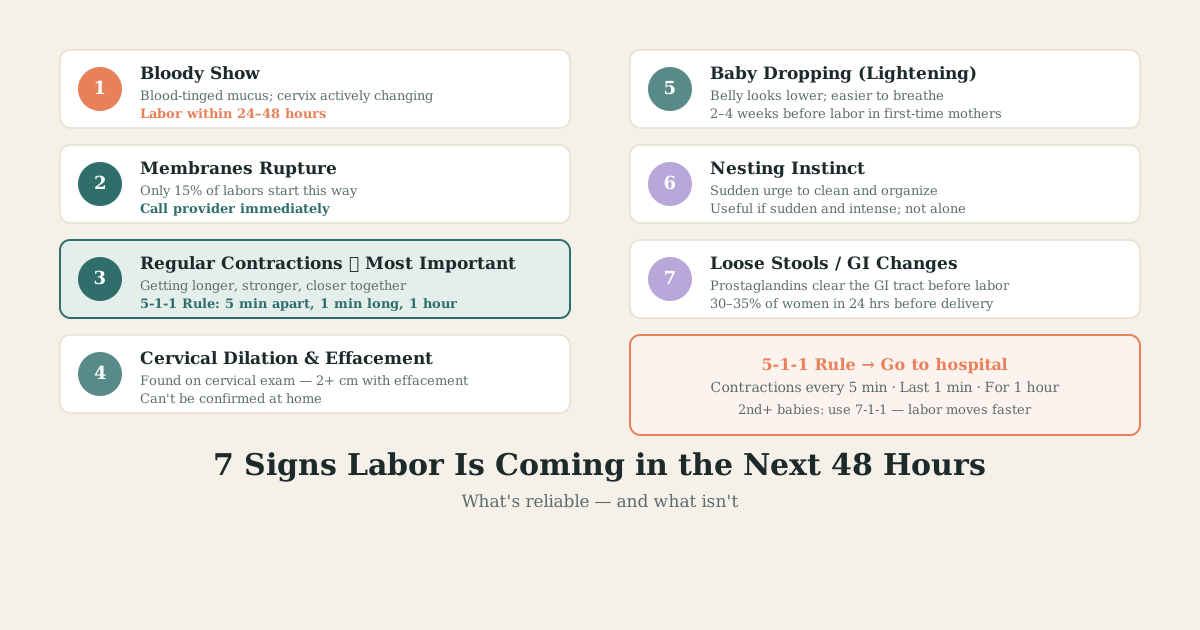
Illustration for When Does Labor Actually Start? Signs, Stages, and Timing
labor-signs7 min read

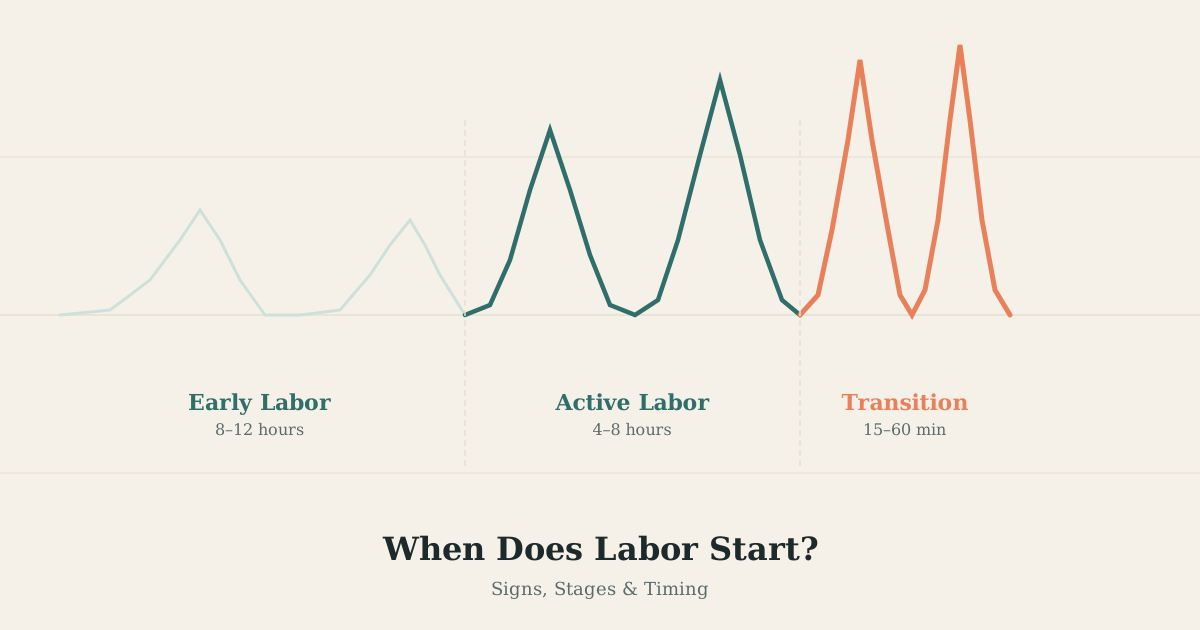
When Does Labor Actually Start? Signs, Stages, and Timing

Labor starts when uterine contractions become regular and cause cervical change. Here's how to tell the difference between false alarms and the real thing.

Read
Illustration for 7 Signs Labor Is Coming in the Next 48 Hours
labor-signs8 min read

7 Signs Labor Is Coming in the Next 48 Hours

Bloody show, regular contractions, water breaking, and 4 other signs that labor may start within 48 hours, plus the 5-1-1 rule for when to go to the hospital.

Read
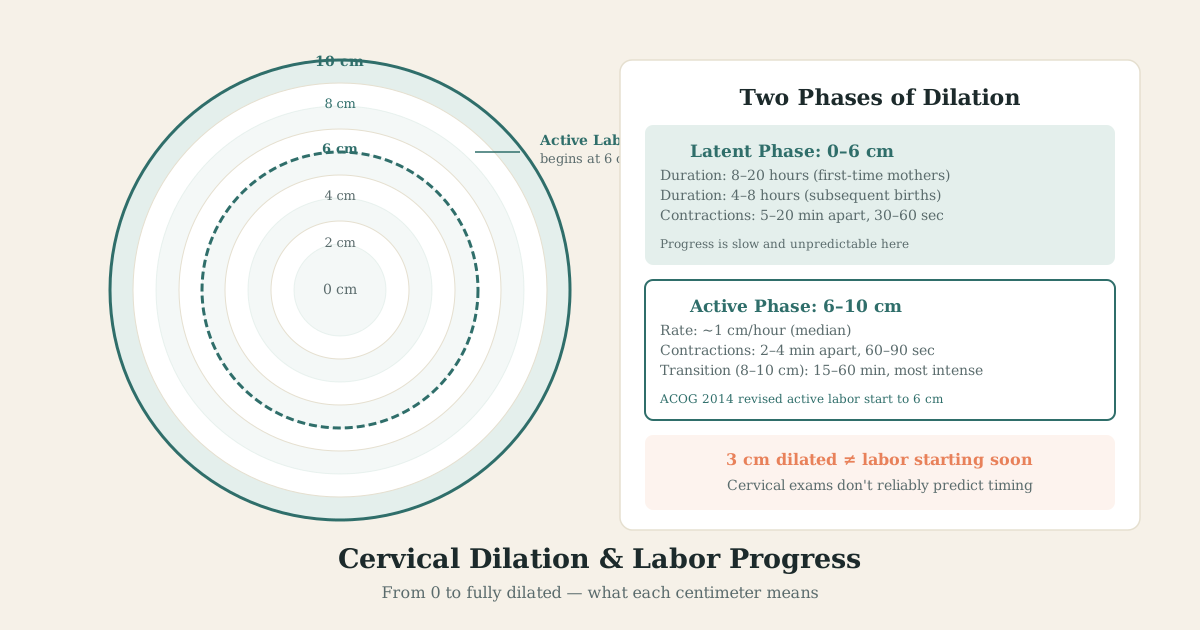
Illustration for Cervical Dilation and Labor Progress: A Plain-Language Guide
labor-signs7 min read

Cervical Dilation and Labor Progress: A Plain-Language Guide

Dilation from 0 to 6 cm can take days. From 6 to 10 cm typically takes 1-3 hours in active labor. Here's what each number actually means.

Read
Illustration for Braxton Hicks vs Real Contractions: The Difference
labor-signs8 min read

Braxton Hicks vs Real Contractions: The Difference

Braxton Hicks stop when you move, hydrate, or rest. Real labor contractions keep coming and get closer together. Here is how to test the difference at home.

Read
Illustration for How to Time Contractions Correctly
labor-signs8 min read

How to Time Contractions Correctly

Time from the start of one contraction to the start of the next, not the gap between them. Here is the correct method, the 5-1-1 rule, and the mistakes that mislead.

Read
Illustration for Water Breaking: What Happens and When to Call
labor-signs9 min read

Water Breaking: What Happens and When to Call

Only a minority of labors begin with the water breaking. Here is how to tell amniotic fluid from urine, which colors are emergencies, and why the clock starts at rupture.

Read
Illustration for The Three Stages of Labor: A Complete Walkthrough
labor-signs8 min read

The Three Stages of Labor: A Complete Walkthrough

First, second, and third stage, plus the recovery hour often called the fourth. What happens in each, and how long each typically lasts.

Read