7 Signs Labor Is Coming in the Next 48 Hours
Bloody show, regular contractions, water breaking, and 4 other signs that labor may start within 48 hours, plus the 5-1-1 rule for when to go to the hospital.
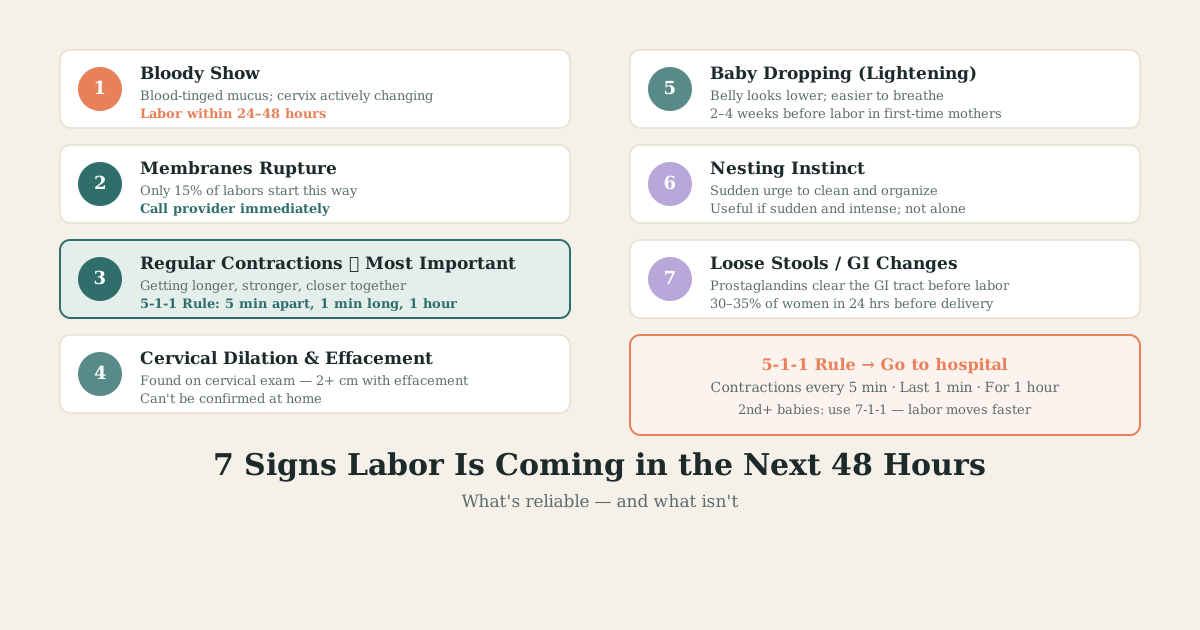
The last few weeks of pregnancy are full of signs that get labeled "labor is coming soon!". Some of them are genuinely predictive, and some are just your body doing what it does at 38-39 weeks. Here's how to sort them.
Check your probability of going into labor this week based on your gestational age and birth history.
1. Bloody Show
Bloody show is one of the more reliable signs that cervical change is actively happening. It refers to blood-tinged or brownish mucus discharge, sometimes mixed with the mucus plug, sometimes separate from it.
It happens when the cervix dilates or effaces enough to rupture small blood vessels in the cervical tissue. This is different from the mucus plug passing (which can happen weeks before labor); bloody show involves actual blood, even if just a small amount.
About 10-20% of women in active labor have bloody show in the hours immediately preceding regular contractions. Seeing it strongly suggests the cervix is changing now, not weeks from now. Labor typically begins within 24-48 hours, though some women have bloody show and then go several more days.
What it looks like: Pink, red, or brownish mucus discharge. The amount is usually small (a tablespoon or less).
When to call your provider: If you're soaking a pad or having bright red bleeding like a heavy period, call immediately. That's not bloody show. It's bleeding, and it needs immediate evaluation.
2. Water Breaking (Rupture of Membranes)
Movies suggest labor always starts with a dramatic gush. In reality, only about 15% of labors begin with membrane rupture before contractions. For 85% of women, contractions come first and the water breaks later: often not until active labor, or sometimes not until the provider breaks it during labor (AROM).
When membranes do rupture first (PROM, premature rupture of membranes), it can be a gush or a slow trickle. Amniotic fluid is clear to pale yellow, watery, and typically odorless or faintly sweet. It doesn't stop coming the way urine does; it continues to leak because the baby's head doesn't fully seal the opening.
The test at home: Put on a clean pad and lie down for 20-30 minutes, then stand up. If fluid pools and releases when you stand, it's more likely amniotic fluid than urine or discharge.
When to call: If you think your water has broken, call your provider regardless of whether you have contractions. Most providers want you assessed within 1-2 hours. Two reasons: (1) the risk of cord prolapse is low but serious, and (2) once membranes rupture, GBS-positive women need antibiotics promptly.
Color matters: Clear or pale pink is normal. Green or brown fluid suggests meconium; call immediately.
3. Contractions Becoming Regular and Closer Together
This is the most important sign. Random or occasional contractions don't mean labor is starting. The pattern is what matters.
Labor contractions follow a progression: they become longer (from 30 seconds to 60-90 seconds), stronger (from mild discomfort to waves you can't talk through), and closer together (from every 15-20 minutes to every 3-5 minutes).
If you're timing contractions and they're getting consistently closer and stronger over 1-2 hours, that's early labor. If the pattern stalls or contractions space out again, it may be prodromal labor (see our article on when labor actually starts for the distinction).
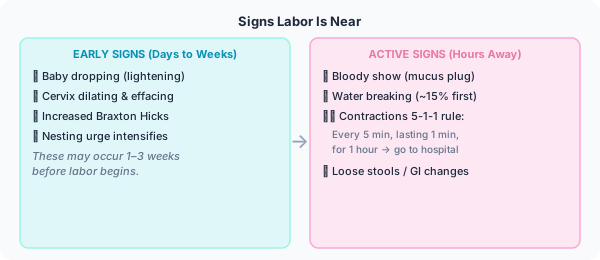
The 5-1-1 Rule: Head to the hospital when contractions are:
- Every 5 minutes apart
- Lasting at least 1 minute each
- For at least 1 hour consistently
For second or third babies, many providers use the 7-1-1 rule (heading in when contractions are every 7 minutes) because labor often moves faster and there's less time to spare.
4. Cervical Dilation and Effacement
You won't know this one without a cervical exam, either a prenatal check or a triage visit. But for many women in the final weeks, prenatal exams reveal that the cervix is already dilating and effacing before labor starts.
Finding out you're 2-3 cm dilated and 70% effaced at your 39-week appointment doesn't mean labor is starting today. But it does mean your cervix is doing the early work, and labor is more likely within days than weeks.
What effacement means: The cervix is normally about 3-4 cm long. Effacement is the process of it shortening (thinning out) before and during dilation. 100% effaced means the cervix is fully incorporated into the lower uterine segment. Most first-time mothers need significant effacement before dilation progresses; multiparous women often dilate while still effacing.
Station: This refers to how far the baby's head has descended into the pelvis, measured in centimeters above or below the ischial spines. A baby at -2 station is 2 cm above the spines (floating); at 0 station, the head is engaged; at +2, crowning is imminent. For first-time mothers, the baby often engages (drops to 0 station or below) before labor begins. For subsequent pregnancies, engagement often doesn't happen until active labor.
For a deeper look at how cervical dilation maps to labor progress, our article on cervical dilation and labor covers it in detail.
5. Lightning / Baby Dropping
"Lightening" is the shift in the baby's position as the head descends deeper into the pelvis in the final weeks. For first-time mothers, this often happens 2-4 weeks before labor. For subsequent pregnancies, it may not happen until labor itself begins.
Signs you might notice:
- Your belly looks lower or has changed shape
- You can breathe more easily (the baby is no longer pushing up into your diaphragm)
- You need to urinate more frequently (the head is pressing on the bladder)
- Pelvic pressure and heaviness increase
- Waddling gait becomes more pronounced
Lightening alone doesn't predict labor within 48 hours. For first-time mothers it can precede labor by weeks. But combined with other signs on this list, it's part of the picture.
6. Nesting Instinct
The nesting urge (a sudden, intense drive to clean, organize, and prepare) often spikes in the days before labor. It's not folklore. The hormonal cascade leading up to labor includes shifts in estrogen and oxytocin that may drive this behavior.
It's most useful as a sign when it's unusual for you. If you're suddenly reorganizing the linen closet at 2am at 39 weeks and you haven't felt this way before, pay attention.
Caveat: Nesting happens throughout the third trimester for many women, so a single nesting episode isn't a reliable predictor. The more meaningful signal is a sudden intensification or urgency to it.
7. Loose Stools / GI Changes
Prostaglandins are the hormones that ripen the cervix and trigger uterine contractions. They also stimulate the smooth muscle of the gastrointestinal tract. In the 24-48 hours before labor, many women experience loose stools, diarrhea, nausea, or crampy GI discomfort.
This isn't a sign something is wrong. It's the body clearing out the lower GI tract before labor. It's more common than people discuss.
About 30-35% of women in active labor report GI symptoms in the 24 hours before delivery. It's not a guarantee, and it's not specific enough to replace the contraction pattern, but combined with other signs, it adds to the picture.
Stay hydrated. Loose stools and nausea before labor can cause mild dehydration, which can slow contractions and cause fetal heart rate variability. Drink water and electrolytes if you're having GI symptoms in late pregnancy.
When to Go In Regardless of These Signs
Don't wait for the 5-1-1 rule if:
- You have heavy vaginal bleeding (not just bloody show)
- Amniotic fluid is green, brown, or foul-smelling
- You notice significant reduction in fetal movement
- You have severe headache, visual changes, or sudden swelling (possible preeclampsia)
- You're less than 37 weeks with regular contractions
- You had a prior cesarean and are having strong contractions
- Your gut says something is wrong
The 5-1-1 rule is guidance for normal, low-risk labors. Your instincts about your own body matter. Triage staff would always rather reassure you than have you wait at home too long.
Signs That Don't Reliably Predict Labor in 48 Hours
For balance, here's what doesn't reliably mean labor is imminent:
- Mucus plug passing: Can happen weeks before labor. It regenerates. Not a reliable 48-hour predictor.
- Increased Braxton Hicks: Common throughout the third trimester and not the same as labor contractions.
- Round ligament pain: Sharp pain in the groin/inner thigh. This is the round ligament stretching, not cervical change.
- Increased pelvic pressure (without dilation): Uncomfortable, but not predictive without exam findings.
Putting It All Together
None of these signs is definitive in isolation. Bloody show + regular contractions + GI changes in a 39-week first-time mother is a very different picture from isolated pelvic pressure at 36 weeks.
The pattern of multiple signs together is more meaningful than any single one. And when contractions fit the 5-1-1 rule, that's your clearest signal.
Estimate your personal delivery window using gestational age and parity, and see our article on preparing for labor in the third trimester to get ready before these signs appear.
Learn more about the research and team behind our tool on the about page.